Staff in Action: Sophie Eckert
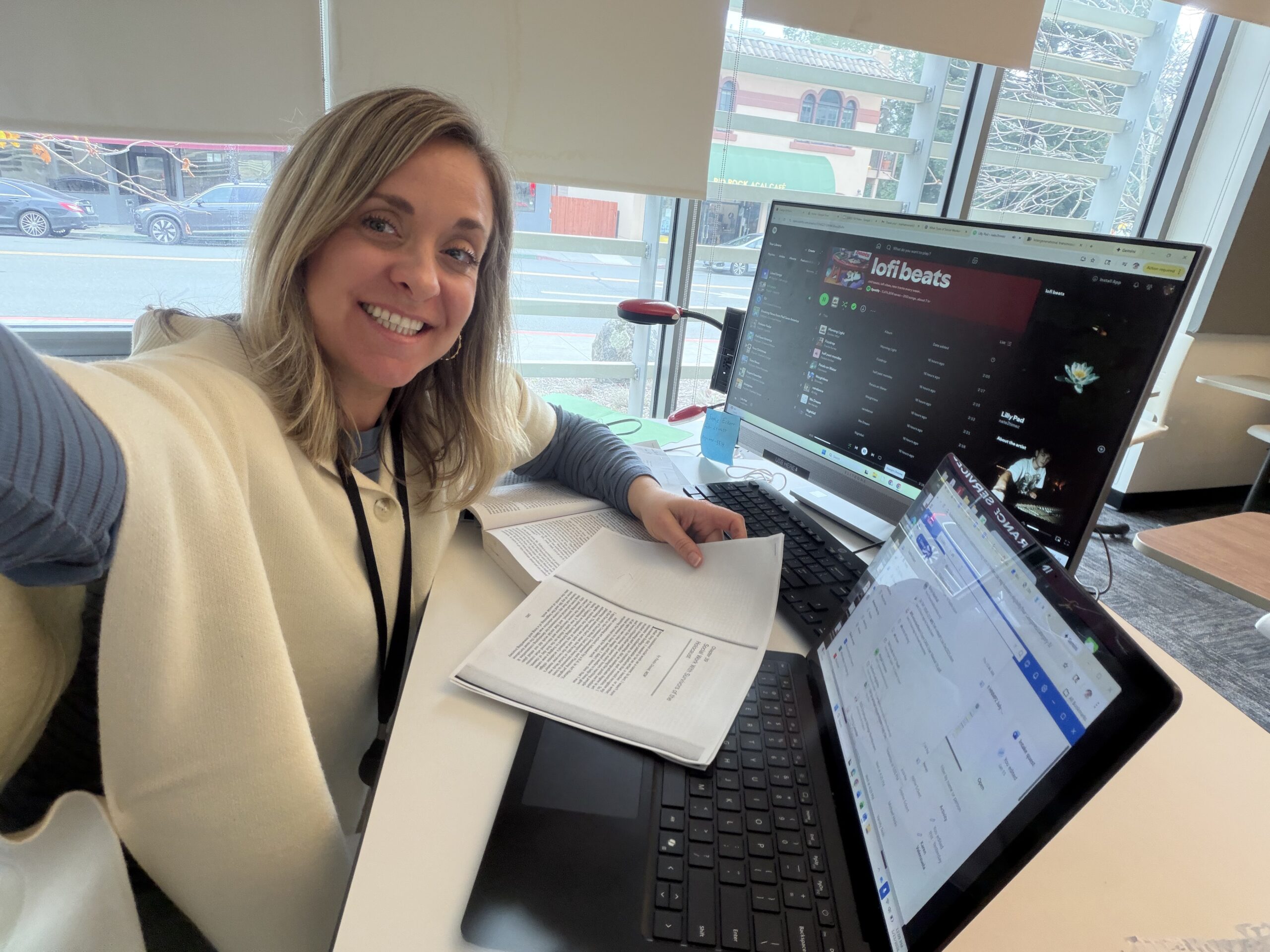
Sophie Eckert, MSW, M.Ed, is Program Director for the Marin County Transitional Aged Youth and Transitional Housing Program at Alternative Family Services. Get to know more about Sophie and her work here at AFS.
What are your main responsibilities at AFS?
I’m the program director for Marin Transitional age youth and we run county contracted programs for current and former foster youth, mostly housing programs. My responsibilities include 1) Supervising a team of four caseworkers, 2) I’m the liaison between AFS and Marin County, 3) I’m responsible for managing our financials. I work really closely with Finance to say I think we should invest here. The kids need this. How can we get it to them?
And 4) I’m responsible for basically running all of the county funded programs that we have. And part of that also comes with being on call. I’m on call kind of always/ I don’t leave my phone on in the night, but at any moment if one of my staff need help with a client, I dare to respond. And a lot of our young people love to just go up the chain of command and call me all the time anyway.
What led you to work in this field?
My mom’s retired now, but she was a clinical child psychologist and when I was growing up, she worked as the child psychologist for a children’s shelter, emergency placement shelter in Woodland. It’s Yolo County and she probably told me too much about what the kids were experiencing and what had led them to being taken away from their parents and put into an emergency shelter. And so from a very young age, I just knew that kids were in foster care and that not everyone’s life was as good as mine. And I think that her sense of purpose made me feel like my job when I grow up should be about helping others and being of service to your community. So social work goes hand in hand with that idea.
I got my Master’s in social work. I also have my Master’s in education and my teaching credentials. I kind of vascillated between teaching and being a social worker and come to find out they’re actually very similar. They’re not that different. If you’re a teacher, you just are a social worker.
And I love working for AFS. Really this program is incredibly special. There’s nothing like it. I was a case worker in 2013 for the program I now run and I left and I came back as the program director because I spent time other places and I realized just like how incredibly special Marin TAY is.
What would you say are the three best things about your job?
The first best thing is the young people that we work with because they’re so fun. I think if you want to work with youth, transitional age youth, the most important thing is if you like this age group. I love this age group. They’re so funny, always keep them on my toes, always making me laugh, really smart. They’re really fun, interesting people and I really enjoy spending time with them.
I love when young people just come in and they hang out in my office. I love doing fun stuff with them. I love talking to them. I love the clients. The clients are fantastic.
Then the staff, I love my staff. I think we’re a great team. We have really great flow. We also like to joke around. I mean it’s definitely a positive environment, feels good to come into the office. It feels nice to have staff meetings. A lot of laughing, and sometimes tears together.
I think the third thing – which not putting in any order – but I think the mission of the agency here at AFS, from the caseworkers on the front lines down to the accounting staff. Everyone truly cares about helping kids. They want to help kids and families.
Our department will bend over backward and do crazy things for me to be able to help kids in ways that make their life hard. I may say I really want to help this kid do this thing – how can we get the money to pay for it? And they understand this is in the best interest for our young person, so we’ll make it happen. I think just the dedication to the mission of helping children and families that I feel agency wide, I also think that’s really special about AFS. I don’t think you find that everywhere.
What would you say are the three toughest things about your job?
Well, this job, we call it HEART, right? I mean, you need a lot of soft skills. You need training to do this job and you also just need to know a lot of the resources available so you can connect your clients.
But it’s really HEART work, right? You have to genuinely have a real relationship with each kid. And I call them kids, but they’re not kids. I very much believe that the relationship is the vehicle for change for all of our kids in our program.
If you’re not using your heart, you’re not doing it right. And it’s painful. I mean, it hurts your heart when you know a kid is being trafficked sexually. It hurts your heart when a kid goes to jail that you really love. I mean, these are all really, really awful things that our kids experience all the time and it can feel heavy.
That’s my only answer.
What would you say are some of the biggest misconceptions about your clients?
In Marin, there’s a lot of really well-meaning affluent people who really would like to help current and former foster youth, teenagers and young people. And I think you need to really educate yourself on what complex trauma is, because complex trauma is very different from PTSD or a classic trauma disorder.
You will see that young people with complex trauma have a really negative self-image. They also have difficulty in personal relationships and they have a pretty extreme inability to regulate themselves. So those three things together help explain the story of the behaviors that we see from our young people.
What might look like laziness, what might look like defiance or aggression, or frankly just being really rude, what might look like someone who just has no interest in in working with you or someone who drops the ball or someone who just can’t get it together – it’s all explained by complex trauma. That’s why the relationship that they have with all the staff is the most important thing to getting them to actually use these resources that these very well meaning people are offering to them.
Please tell us about one impactful moment you’ve had since working at AFS.
Yes, I back when I was a caseworker over a decade ago, I had a client in our transitional housing program plus. They were 21 or 22, I don’t remember how old, but they broke the law and went to jail. And we essentially kicked them out of our program. We prematurely exited them.
And I was upset about what this young person had done. Frankly, I was mad about it. I mean, just because you’re a caseworker doesn’t mean you’re not going to have feelings about decisions or behavior. If you have a real relationship, then you might feel upset about the decisions that your client has made.
And at the time we all were meeting about it – it was a group of a group of kiddos who did this illegal thing together. And they said, Sophie, you need to go talk to them. You need to go talk to this boy and say, here’s what you need to do if you want to come back in our program. And I was like, why would we let this person back in our program? After what they did? And they said, if this was your kid, would you never speak to them again? And I was like, oh, no. And they’re like, OK, well then stop making it about you and go talk to them, tell them they have to do these things if they want to come back in the program.
So I did, and this person did all the things we asked them to do. They came back in the program and were one of the most successful, one of the biggest success stories we’ve ever had. I mean, just a total 180.
I still, 10 something years later, talk to this person and they’re having a really great life. And it was one of the sweetest relationships with a client I’ve ever had in my life.
Is there anything surprising about you that people would not expect?
I have Tourette syndrome. That’s a neurological disorder. People probably know what Tourette’s is by hearing people swear on TV. I don’t have it that badly.
If you were going to give one piece of advice to someone who is newly starting out in this field, what would you say to them?
I would say, find a way to like every single client that you have. Tell yourself, I like this person, I just don’t know why yet and then find why. And if you can’t like and/or love every client, find a new job.
Sophie Eckert, MSW, M.Ed, is Program Director for the Marin County Transitional Aged Youth and Transitional Housing Program at Alternative Family Services. Get to know more about Sophie and her work here at AFS.
